LiteLLM Model Sync
An event function that reads each LiteLLM gateway's /model/info and writes what it learns into Open-WebUI's model configs. A gateway knows each model's friendly name, provider, family and capabilities; Open-WebUI only sees ids. After a sync:
- each model has the gateway's display name, and tags for its vendor and family (optionally its capabilities too);
- its vision capability is set as the gateway states it;
- non-chat models (embeddings, decision, transcription) are hidden from the model selector but stay enabled;
- every config it wrote has a public read grant (Open-WebUI's
user:*), so users who are not admins can pick the model.
It walks the OpenAI connections configured in Open-WebUI, asks each one for /model/info (the connection URL minus /v1, with the connection's key) and skips any that are not LiteLLM. The config id is the one Open-WebUI gives the connection's model (prefix.name), so the config overrides it.
Like mcpo Sync, it uses the scheduled-sync pattern: class Event(PluginScheduledSync) from the jobs library runs sync() at startup, when the function is enabled or its valves are saved, and then every SYNC_INTERVAL_MINUTES (default 60, on one worker; 0 turns the repeat off). The interval's default comes from LITELLM_SYNC_MINUTES in the Open-WebUI container's environment (jobs: in plugin.yaml).
What it never touches. It changes and deletes only configs it wrote (marked managed_by with this function's id), plus configs nobody named (still the raw id, which Open-WebUI creates when a model is merely toggled). A config someone renamed is left alone unless ADOPT_EXISTING is on. It prunes a config only when that config's own connection answered with models in this run, so a gateway that is down or returns nothing deletes nothing. Tags a person added are kept; only the ones it wrote are replaced.
Valves: INFO_PATH, INCLUDE_CONNECTIONS, SET_VISION, TAG_VENDOR, TAG_FAMILY, TAG_CAPABILITIES, NATIVE_FUNCTION_CALLING (off by default: it changes how tool calls are made), PRUNE_MISSING, PUBLIC_READ, ADOPT_EXISTING, HIDE_MODES, REQUEST_TIMEOUT, SYNC_INTERVAL_MINUTES, ENABLE.
Moving from another sync. Configs an earlier sync wrote carry its marker. Name it in plugin.yaml (jobs: adopt_markers: [litellm-model-sync]) and deploy: they are then updated, take this function's marker, and are pruned like its own (plugin format).
Test
owpp check litellm_model_syncbundles it exactly as the deploy does, compiles it and lists names it uses but never defines.owpp bundle litellm_model_sync out.pywrites the deployed code to read or diff.owpp test litellm_model_syncrunstests/against a mock Open-WebUI and a stand-in LiteLLM gateway (docs/testing.md).- On a live Open-WebUI: with an OpenAI connection to a LiteLLM gateway, save the valves. The log shows
LiteLLM Model Sync: N model config(s) written, M removed, Admin Settings > Models shows the display names and tags, and a user who is not an admin sees the models in the selector.
Deploy
- Function type: event.
owpp deploy --only litellm_model_sync --dry-run, then without--dry-run. A single-plugin deploy never prunes.
Screenshots
Taken on Open-WebUI 0.13.4 on 2026-11-22 by tools/screenshots/run.py (how).
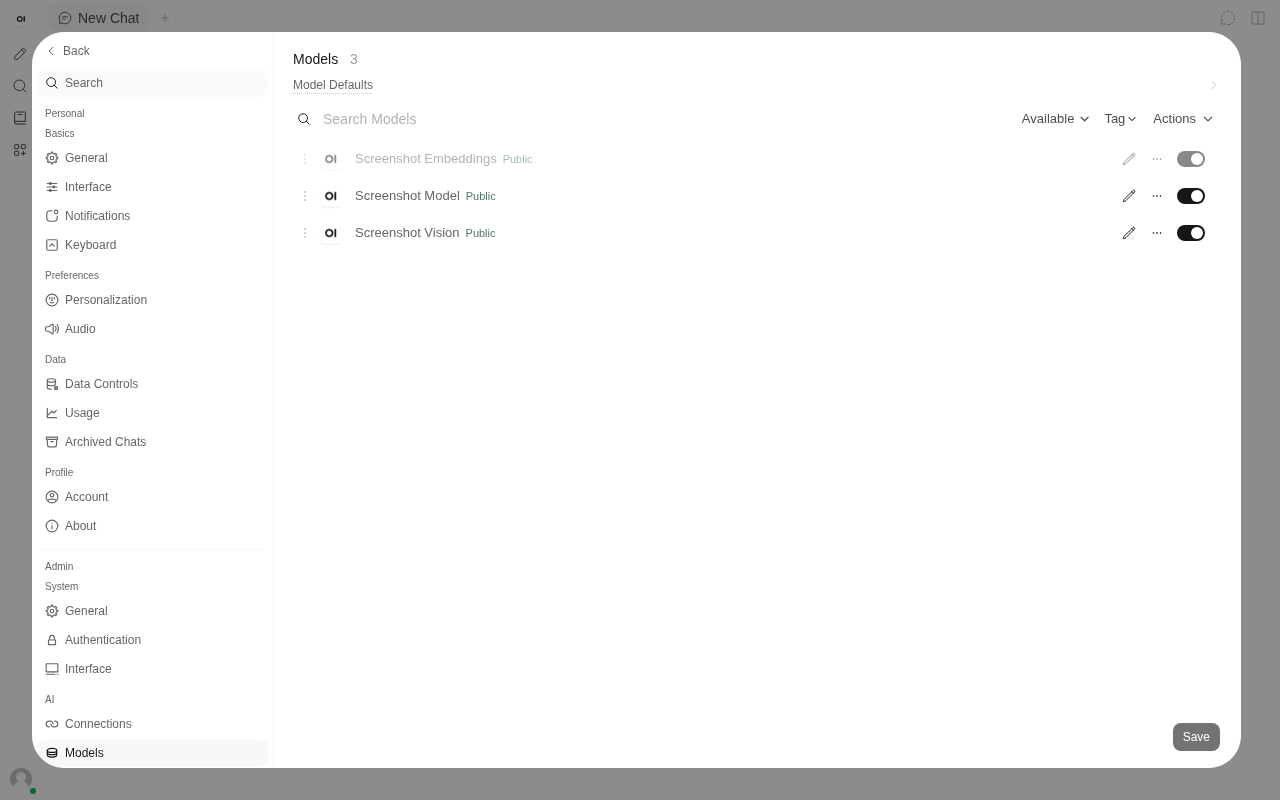
Admin Settings > Models after a sync: display names from the gateway, each readable by every user (Public), and the embedding model greyed out (hidden) but still on.
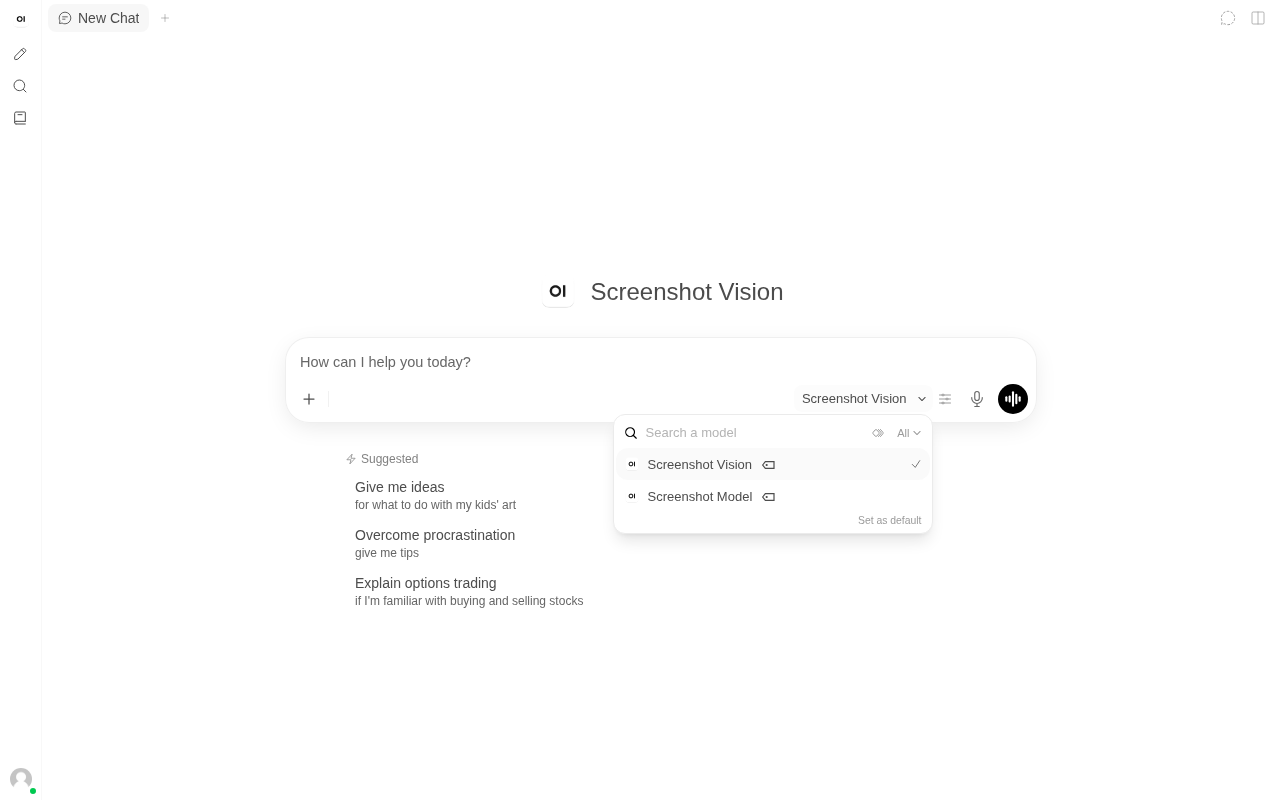
A user's model selector after a sync: the gateway's display name, readable by every user, and the embedding model hidden.